Apartment Staging: A Practical Room-by-Room Guide for Sellers
Apartment staging is the process of arranging furniture, light, storage, and personal items in a rental or condo unit so that listing photos and in-person showings present each room clearly and consistently. It usually happens before a photographer arrives, and it can be handled by the owner, a real estate agent, or a professional home stager working from a written plan of what to change room by room.
- What does apartment staging actually involve?
- How is apartment staging different from staging a house?
- Which rooms matter most when you stage an apartment?
- How do you choose between diy staging and hiring a stager?
- How much time should you set aside before listing photos?
What does apartment staging actually involve?
At its core, apartment staging means walking through each room and deciding what stays, what gets moved, and what gets removed before photos are taken. This includes furniture placement, clearing counters and shelves, adjusting lighting, and thinking about how a room reads in a photo rather than how it feels day to day when you live there.
Most stagers work room by room rather than treating the whole unit as one project. A living room gets assessed for sightlines and furniture scale. A bedroom gets assessed for how much floor is visible. Kitchens and bathrooms get cleared of daily clutter so the surfaces read as open. None of this requires new furniture in every case. Often it means using what is already in the unit differently, or removing a few pieces that make a small room look smaller.
The output of this process is usually a plan, sometimes informal notes, sometimes a written document a stager hands to the owner or the listing agent. That plan says what to change in each room and in what order, so the person doing the physical work (whether that is the owner, a moving crew, or the stager) knows exactly what to touch before the camera arrives.
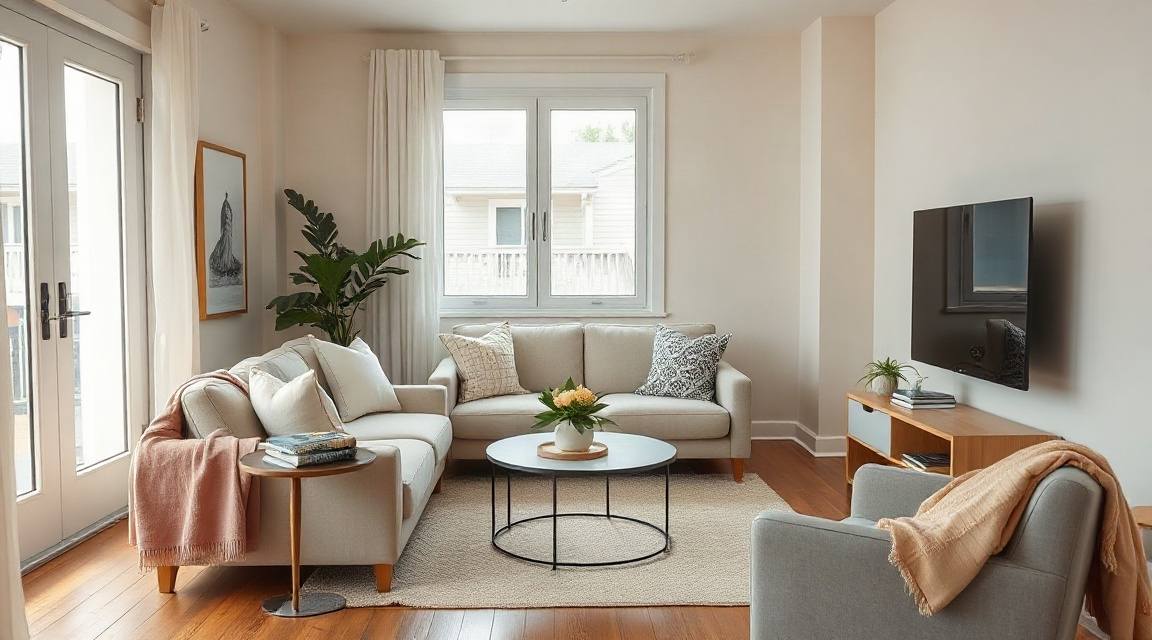
If you want to see how this looks across different markets, you can find a home stager near you and look at examples from your area before deciding whether to do it yourself.
How is apartment staging different from staging a house?
The mechanics are similar, but the constraints are not. A house usually gives a stager more square footage to work with, more rooms to selectively empty or fill, and more flexibility around furniture scale. An apartment or condo unit is usually smaller, often has fewer natural light sources, and frequently has shared walls or a single main window per room. That changes the priorities.
In a house, a stager might focus on separating open-concept spaces so each area reads as its own room. In an apartment, the more common problem is the opposite: rooms that are too small to hold the furniture currently in them, which makes photos look cramped no matter how good the lighting is. Removing one or two pieces of furniture is often more useful in a small unit than adding anything.
Storage is another point of difference. Houses tend to have closets, basements, or garages where items can be moved out of frame. Apartments often do not have that extra space, so staging a unit sometimes means temporarily relocating boxes or seasonal items off site, or at minimum consolidating them into a single closet that stays closed during photos.
Balconies and in-unit laundry, when present, also get more attention in apartment staging than they would in a house listing, simply because they are often the deciding feature for someone comparing similar units in the same building. A cluttered balcony or a laundry nook full of supplies undercuts an otherwise well-staged unit.
Which rooms matter most when you stage an apartment?
Not every room carries equal weight in a listing. The living room and the kitchen are usually the first two rooms buyers or renters look at closely, since these are the spaces where most of the visible living happens and where furniture scale is easiest to judge in a photo. The main bedroom comes next, mainly because floor space and closet organization are easy to see and hard to fake.
Bathrooms need less furniture work but benefit from clearing counters and coordinating what is left visible. A single stack of neutral towels reads better in a photo than a full counter of daily items. Secondary bedrooms, home offices, and dens tend to get staged last, and sometimes only get a light pass, since they carry less weight in most listings than the main living areas.
Pro tip: if you can only stage two rooms properly before photos, choose the living room and the main bedroom. These are the rooms buyers spend the most time looking at across multiple listings, and clear, uncluttered photos of these two spaces tend to do more work than a fully staged secondary room that gets one photo in the gallery.
Entryways are easy to overlook but matter more than their size suggests, since they set the first impression in an in-person showing even when they rarely get their own listing photo. A cleared entry, without a pile of shoes or coats, changes how the rest of the unit is perceived as soon as someone walks in.
How do you choose between DIY staging and hiring a stager?
This depends on the time you have, how comfortable you are making these decisions without outside input, and how many rooms need real work. Some owners can walk through a unit, spot the obvious clutter, and fix it themselves in an afternoon. Others find it harder to see their own space objectively and benefit from a second set of eyes, whether that is a stager, an agent, or a written report built from the listing photos themselves.
| Approach | Time investment | Who it tends to suit | Main trade-off |
|---|---|---|---|
| DIY staging | Owner does the walkthrough and changes themselves | Owners comfortable making design decisions alone | Easy to miss issues you have stopped noticing in your own space |
| Hiring a home stager | Stager visits, advises, sometimes brings furniture | Listings where the agent wants a consistent look across the building | Requires coordinating a visit and following their room-by-room plan |
| Written staging report from photos | A room-by-room document built from existing listing photos | Agents and stagers handling several units at once | Works best when paired with someone who can act on the notes |
| No staging at all | Unit is photographed as-is | Owners on a tight timeline | Photos may show clutter or furniture scale issues that are simple to fix but easy to miss without a plan |
If you are weighing these options for a specific unit, it can help to compare staging options side by side rather than guessing which approach fits your timeline. Agents managing several listings at once, particularly in busy markets like Toronto, Ottawa, or Oshawa, often lean on a written plan simply to keep the process consistent across units.
How much time should you set aside before listing photos?
There is no fixed number that applies to every unit, since it depends on how much clutter is present and how many rooms need attention. A studio or one-bedroom with minimal furniture usually takes less time to prepare than a larger unit with several rooms and a lot of personal items on display. What matters more than the total time is having a clear order of operations, so the work happens room by room instead of jumping around and losing track of what has already been addressed.
A written plan helps here because it turns a vague task ("make the apartment look better") into a specific list ("clear the kitchen counter, move the armchair away from the window, remove the rug in the entry"). Working from a list, whether it comes from a stager, an agent, or a report built from the listing photos, tends to move faster than starting from scratch in each room.
For sellers who want a broader view of what to prepare before a photographer arrives, not just staging but the wider set of small tasks that come up before a listing goes live, the Listing Prep Almanac walks through the sequence most agents follow. The Canada Mortgage and Housing Corporation also publishes general guidance for sellers preparing a home, which can be a useful starting point if you are selling privately without an agent involved.
FAQ
Does apartment staging mean buying new furniture? No. Most staging work uses what is already in the unit, rearranged or partially removed, rather than adding new pieces. New furniture is sometimes brought in for a unit that is empty or very sparsely furnished, but this is not the default approach.
Can you stage an apartment yourself without hiring anyone? Yes, many owners do their own staging, particularly for smaller units with less furniture to work around. The main risk is missing clutter or scale issues you have stopped noticing in your own space, which is why a second opinion, whether from an agent, a stager, or a written plan, can catch things a walkthrough alone might not.
Do rental units need to be staged differently than units for sale? The core approach is similar since both rely on clear, uncluttered photos. The main difference is usually the level of investment involved, since a unit being sold may justify more preparation time than a short-term rental listing.
Key takeaways
| Point | Why it matters |
|---|---|
| Apartment staging focuses on furniture, light, and clutter, room by room | This is the part of a listing an owner or stager can control directly before photos are taken |
| Small units need subtraction more than addition | Removing furniture often improves how a room reads in photos more than adding new pieces |
| Living rooms and main bedrooms carry the most weight | These are the rooms most buyers and renters look at closely across multiple listings |
| DIY, hiring a stager, and a written report each suit different timelines | Choosing the right approach depends on how many rooms need work and how much time is available |
| A written room-by-room plan speeds up the work | Working from a specific list is faster than deciding what to fix as you go |
Keep reading
For sellers
The home staging checklist, room by room
Every room in the house, in the order to do them: what to remove, what to rearrange, and what a photo actually notices.
For sellers
What to fix before selling your house (and what to skip)
The repairs buyers notice first, and the projects you should not start six weeks before listing.
For sellers
How to declutter before selling, without the panic
A calm order of operations for thinning out a house before listing: what goes first, where it goes, and how far is far enough.
Want this list built for your actual rooms?
Upload a few phone photos and the free Staging Snapshot starts the plan for your rooms. No account needed.