Best Paint Colors for Selling a House (No Year Needed)
The best paint colors for selling a house are warm neutrals such as soft greige, light warm white, and pale putty tones on walls, paired with a fresh coat on trim in a clean white and a durable, neutral tone on the front door. These colors photograph well in listing photos, read as clean and calm in person, and let buyers picture their own furniture in the space instead of noticing the wall color first.
In this article
- What makes a paint color good for selling, not just for living in?
- What are the best paint colors for selling a house, room by room?
- Should you repaint every room before listing?
- How do you choose between similar shades?
- How does paint color affect listing photos specifically?
What makes a paint color good for selling, not just for living in?
A color you love living with and a color that helps a listing move through showings are not always the same thing. When you live in a home, you choose colors that reflect your own taste. Deep charcoal, forest green, or a bold accent wall might feel personal and comfortable. When you are preparing to sell, the goal shifts. You want a buyer to walk in and see a space, not a decorating choice they have to mentally undo.
That means favoring colors that are calm, that reflect light rather than absorb it, and that do not compete with the buyer's own imagination. Dark or highly saturated colors can make rooms feel smaller in photos and in person, especially in listings where rooms are lit only with existing fixtures and daylight. Pale, warm neutrals tend to make the same room look larger and brighter without any other change.
Consistency also matters more when selling than when living somewhere long term. A home with five different wall colors across five rooms can feel disjointed in a walkthrough. Buyers moving from room to room absorb a lot of visual information quickly, and a consistent palette lets them focus on layout and light instead of processing a new color scheme every few steps.
Pro tip: Test any candidate color on the actual wall, in the actual room, at the time of day photos will likely be taken. A swatch that looks warm and soft on a card can turn pink, gray, or yellow under different light. Paint a section roughly two feet wide and look at it in the morning and again in the evening before committing.
What are the best paint colors for selling a house, room by room?
Different rooms carry different expectations from buyers, so the palette can shift slightly by room while staying in the same neutral family.
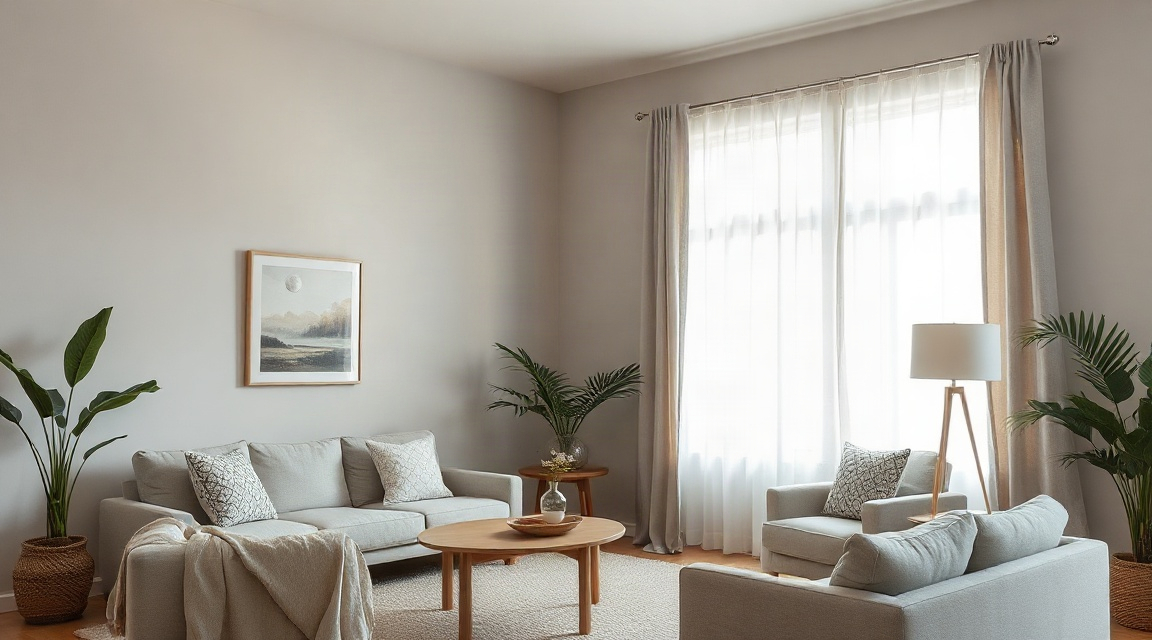
Living rooms and family rooms generally do well with a soft greige or warm light gray. These tones stay neutral under most lighting and pair easily with whatever furniture is staged or left in place.
Kitchens benefit from very light, warm whites on walls, especially where cabinets are a different color. A too-cool white can make a kitchen feel clinical in photos.
Bedrooms often work well in the palest end of warm neutrals, close to off-white, since buyers tend to associate lighter bedrooms with rest and quiet rather than a strong color statement.
Bathrooms should stay light as well, particularly where natural light is limited. Pale warm gray or soft white keeps small bathrooms from feeling closed in.
Entryways and hallways are good to treat like connective tissue. Keeping them close to the main living area color, or in a clean neutral, helps the whole main level read as one flowing space rather than a series of disconnected rooms.
For a longer, room-by-room checklist that goes beyond paint, the Listing Prep Almanac walks through what to address in each room before a photographer arrives.
Should you repaint every room before listing?
Not always, and this is where judgment matters more than a fixed rule. Repainting has a real cost in time and effort, so it helps to be selective about where it makes the most difference.
Rooms with strong or dated colors, heavy scuffing, or noticeable marks on walls are usually good to address first. Rooms that are already a light, neutral tone in good condition may not need a full repaint at all, just some touch-up around switch plates, corners, and baseboards.
| Approach | Time and effort | Effect on listing photos | Best used when |
|---|---|---|---|
| Repaint every room in one neutral palette | Highest, spans the whole home | Most consistent look across all photos | Walls carry several bold or dated colors throughout |
| Repaint only the most visible or boldest rooms | Moderate, focused effort | Noticeable improvement in main photos, some inconsistency elsewhere | Time or scheduling before listing is limited |
| Touch up existing neutral paint only | Lowest, spot work | Cleaner surfaces, same overall color story | Walls are already light and neutral with minor marks |
| Leave paint as is, address other staging items | Minimal for paint specifically | No change to color, may draw attention in photos | Budget and time are better spent on furniture and light fixtures |
A home stager or real estate agent who has seen many listings in your area can help you decide which rooms actually need paint and which do not. If you are not sure where to start, you can find a home stager near you who can walk through the property with you before you buy any paint.
How do you choose between similar shades?
Once you have narrowed things down to a family of warm neutrals, the differences between individual shades can feel small on a paint chip and large once they are on the wall. A few practical steps help avoid an expensive guessing process.
Look at the room's fixed elements first. Flooring, countertops, and any built-in cabinetry that will not be changed before listing should guide the undertone you pick. A warm oak floor generally pairs better with a warm greige than with a cool blue-gray.
Pay attention to the direction the room faces. North-facing rooms tend to get cooler, flatter light and often benefit from a warmer paint color to balance that. South-facing rooms get warmer light and can handle a slightly cooler neutral without feeling cold.
Look at large sample boards rather than small chips, and view them at different times of day, as mentioned earlier. Many paint manufacturers offer larger sample sizes specifically for this reason, and the extra step usually saves a full repaint later.
The Compare staging options page outlines other decisions sellers face alongside paint, such as which furniture to keep in place and which to remove before photos.
Public information from national standards bodies can also help with practical questions like drying times, ventilation, and safe application, which matter more when a home is being prepared quickly. The EPA's page on indoor air quality during painting covers ventilation guidance that applies whether you are painting one room or an entire house.
How does paint color affect listing photos specifically?
Photos compress a three-dimensional room into a flat image, and color behaves differently in that format than it does in person. A wall color that feels balanced when you are standing in the room can look darker, flatter, or more saturated once it is captured on camera and viewed on a small screen.
Warm neutrals tend to translate well because they reflect ambient light evenly, which helps a camera capture detail in both the walls and the furniture without heavy shadows or blown-out bright spots. Bold or dark colors can create high contrast against white trim or ceilings, which sometimes reads as dramatic in person but can look uneven or heavy in a photo.
Consistency across rooms also helps a listing's photo set feel cohesive when buyers scroll through it online. A buyer flipping through ten or fifteen photos is forming an impression quickly, and jarring color shifts from room to room can make the whole set feel less put together, even if each individual room looks fine on its own.
If you are working with a stager or agent who prepares a written report before the photographer arrives, paint color is usually one of the first items addressed, since it affects nearly every photo taken afterward. Staging reports built from a walkthrough of the listing typically flag wall color early, alongside furniture placement and clutter, because it is one of the lower-effort changes with a visible effect on the finished photos.
FAQ
Do I need to repaint if my walls are already a light color? Not necessarily. If your walls are already light and neutral, with no significant marks, scuffs, or fading, a full repaint may not add much. A touch-up on trim and any high-traffic areas is often enough.
Is white always the safest wall color for selling? Pure white can work in bright rooms, but it sometimes reads as stark or cold in photos, especially under artificial lighting. A warm off-white or very light greige generally photographs more naturally and still keeps the room feeling neutral.
How far in advance should paint be finished before photos? Paint should be fully dry and any smell should have cleared well before the photographer's visit, both for the finished look and for anyone walking through the home in person. Giving a few extra days beyond the paint's stated drying time is a reasonable buffer.
Key takeaways
| Point | Why it matters |
|---|---|
| Warm neutrals generally photograph and show better than bold or dark colors | They reflect light evenly and let buyers focus on the space itself |
| Room use should guide slight shifts within a neutral palette | Kitchens, bedrooms, and bathrooms each have different lighting and buyer expectations |
| Not every room needs a full repaint | Rooms already in good, light, neutral condition may only need minor touch-ups |
| Fixed elements like flooring and countertops should guide undertone choices | Paint chosen without them can clash once it is on the wall |
| Color consistency across rooms helps listing photos feel cohesive | Buyers scroll through many photos quickly and notice jarring shifts |
| A stager or agent can help prioritize which rooms to paint first | Their experience with local listings helps focus effort where it matters most |
If you want a second opinion before buying paint, home stagers in Toronto, home stagers in Ottawa, and home stagers in Oshawa regularly walk through listings and can point out which walls will make the biggest difference in photos before a paintbrush comes out.
Keep reading
For sellers
The home staging checklist, room by room
Every room in the house, in the order to do them: what to remove, what to rearrange, and what a photo actually notices.
For sellers
What to fix before selling your house (and what to skip)
The repairs buyers notice first, and the projects you should not start six weeks before listing.
For sellers
How to declutter before selling, without the panic
A calm order of operations for thinning out a house before listing: what goes first, where it goes, and how far is far enough.
Want this list built for your actual rooms?
Upload a few phone photos and the free Staging Snapshot starts the plan for your rooms. No account needed.