Decluttering Before Moving: A Room-by-Room Guide
Decluttering before moving means removing excess belongings from a home in a planned order, usually starting with storage areas and closets and finishing with the rooms buyers see in listing photos, so that packing and showing the home both become easier at the same time. The two goals overlap more than people expect: what you'd pack last, you should usually clear first.
- What does decluttering before moving actually involve?
- Where should you start when a whole house feels overwhelming?
- How does decluttering before moving differ from staging?
- What should you keep out for photos versus pack away early?
- FAQ
What does decluttering before moving actually involve?
At its simplest, decluttering means sorting belongings into what travels to the new home, what gets donated or sold, and what goes in the trash or recycling. The part people underestimate is how much time sorting takes compared to the physical move itself. Boxes are quick to fill once decisions are made. The decisions are the slow part.
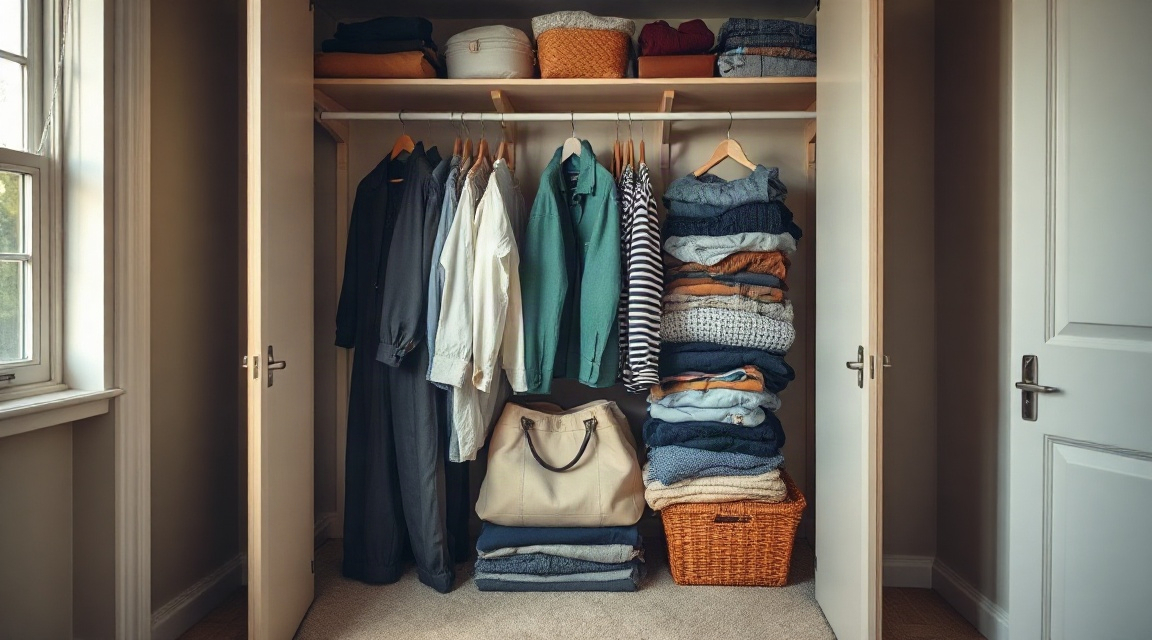
A workable approach treats each room as its own small project with a start and an end, rather than tackling the whole house as one undertaking. Closets first, since they hold the most hidden volume. Then flat surfaces like countertops and dressers, which affect how a room reads in a photograph. Then furniture itself, if pieces are being sold or donated rather than moved.
Local municipal recycling and donation programs, such as those listed by Waste Management Halton or similar regional authorities, list general categories to check before you assume something has to go in the trash. Many household items that seem unsellable are accepted by donation centres or community programs, which can save a separate disposal trip.
Sellers working with an agent already benefit from asking early whether the listing preparation includes a written staging plan, since that document usually flags which rooms need the heaviest decluttering before a photographer arrives. If you are not yet working with anyone, you can find a home stager near you to get that kind of room-by-room guidance before you start packing.
Where should you start when a whole house feels overwhelming?
Start with the rooms that will be photographed, not the rooms that feel most cluttered emotionally. Kitchens, main bathrooms, living rooms and primary bedrooms carry the most weight in a listing, so they earn the first pass even if a garage or basement objectively has more physical clutter.
Within a room, work surfaces before storage. Clear countertops, tables and shelves first, because that is what changes a photograph most immediately. Closets and cabinets can be tidied later since buyers viewing photos rarely see inside them, though a lighter pass there still helps if in-person showings follow.
Pro tip: Take a plain photo of each main room on your phone before you start. It is much easier to see what reads as clutter in a flat image than it is standing in the room itself, and that same photo gives you a clear before-and-after check once you are done.
Set a rough per-room time limit and stick to it. Perfectionism in one room at the expense of the rest of the house tends to produce uneven results, where one bedroom looks staged and the hallway outside it still looks lived-in. A steady pass through every room beats a deep pass through only one.
How does decluttering before moving differ from staging?
Decluttering and staging are related but not the same task, and mixing them up wastes effort. Decluttering removes things. Staging arranges what remains, sometimes adding a small number of neutral pieces to make a room read clearly in photographs. You generally declutter first and stage second.
| Approach | What it changes | Typical time needed | Best used when |
|---|---|---|---|
| Self-directed decluttering | Removes excess items, clears surfaces | Spread over days or weeks | Early in the moving timeline, before any photography is booked |
| Written staging report from a stager | Tells you what to change room by room, based on photos | Delivered quickly once photos are in hand | After decluttering is mostly done, before listing photos are taken |
| Full staging service | Physically rearranges or adds furniture | Usually a single visit or short window | Close to the listing date, once the home is already cleared out |
None of these replace the others. A staging report is only as useful as the decluttering that happened before it, since a stager writing notes from photographs cannot tell you to move a couch that is still buried under boxes. If you're comparing what different sellers actually choose to do, the Compare staging options page lays out how self-directed work, a written report, and full-service staging differ in practice.
What should you keep out for photos versus pack away early?
This is the question that trips up most sellers, because the instinct is to pack everything that isn't strictly needed. But some items earn their place on a shelf or counter for the photo session even though they will be packed the next day.
Keep out: a small number of neutral decorative objects, one or two plants, clean towels in bathrooms, and any furniture that helps a room look proportioned rather than empty. Pack away early: seasonal clothing, duplicate kitchen tools, personal collections, and anything on a wall or shelf that is highly specific to the current owner rather than the room itself.
Countertops in kitchens and bathrooms tend to accumulate the most day-to-day clutter, so they deserve a final check the morning of any photography session, not just an early pass weeks before. Bedrooms and living rooms are more forgiving since surface clutter there builds up more slowly.
Garages, basements and storage rooms are often the last spaces sellers address, but they are not usually photographed directly, so a lighter pass on those spaces still helps, even if the priority sits elsewhere. A stager working from listing photos will not flag a cluttered garage that never appears in a shot, but a buyer walking through in person will still see it.
For homeowners selling without an agent, the Listing Prep Almanac walks through a fuller room-by-room order, including which rooms typically need the most attention before photos are scheduled.
FAQ
How long does decluttering before moving usually take for an average home? It depends more on the number of storage areas than the size of the home. A house with several closets and a full basement takes longer to sort than a smaller home with less storage, regardless of square footage.
Should decluttering happen before or after booking a stager? Before, if possible. A stager working from photographs can only advise on what is visible, so a home that is still cluttered when photos are taken will produce a staging report full of instructions that could have been avoided with an earlier decluttering pass.
What happens to items that are decluttered but not yet packed? Most sellers use temporary storage, whether a spare room, a rented unit, or a portion of the garage, to hold items that are staying for the move but need to be out of sight for photographs and showings. This is a normal part of the process, not a sign that something went wrong.
Key takeaways
| Point | Why it matters |
|---|---|
| Declutter photographed rooms first | Kitchens, bathrooms and living rooms carry the most weight in listing photos |
| Work surfaces before storage | Countertops and shelves change a photograph more than closet interiors do |
| Decluttering comes before staging | A staging report works from what's already visible in a photograph |
| Some items stay out deliberately | A small number of neutral objects can help a room read as lived-in rather than empty |
| Storage areas still deserve a lighter pass | They are not usually photographed but are seen during in-person showings |
Sellers working with a realtor in a specific city can also start with a local list, such as home stagers in Toronto, home stagers in Ottawa, or home stagers in Oshawa, to see how a written staging report fits into the decluttering timeline in that area.
Keep reading
For sellers
The home staging checklist, room by room
Every room in the house, in the order to do them: what to remove, what to rearrange, and what a photo actually notices.
For sellers
What to fix before selling your house (and what to skip)
The repairs buyers notice first, and the projects you should not start six weeks before listing.
For sellers
How to declutter before selling, without the panic
A calm order of operations for thinning out a house before listing: what goes first, where it goes, and how far is far enough.
Want this list built for your actual rooms?
Upload a few phone photos and the free Staging Snapshot starts the plan for your rooms. No account needed.