Dining Room Staging: A Room by Room Guide for Sellers
Dining room staging means arranging the table, chairs, lighting, and surrounding surfaces so the room reads clearly as a place to gather and eat, with clutter, mismatched furniture, and personal items removed or reduced before listing photos are taken. The goal is a room that photographs cleanly and that a buyer can picture using, not a room stripped of character but a room stripped of distraction.
- What does dining room staging actually mean?
- How do you stage a dining room that doubles as an office?
- What should you remove before photos are taken?
- Dining room staging vs living room staging: what's different?
- Do you need a professional for dining room staging?
What Does Dining Room Staging Actually Mean?
A dining room is one of the smaller rooms in most listings, which is exactly why it gets overlooked. Sellers spend their attention on kitchens and living rooms and treat the dining room as an afterthought, a table with whatever chairs happen to match it, maybe a runner, maybe not.
Staging this room properly starts with a simple question: does the space read as a dining room the moment someone opens the door or looks at the photo. If the answer is no, because the table is covered in mail, or the chairs don't match, or there's a treadmill in the corner, the room needs work before anything else happens.
The core moves are consistent across most homes. Clear the table down to a simple centerpiece or nothing at all. Make sure the chairs match each other, even if that means borrowing or temporarily storing mismatched pieces. Check the lighting fixture is clean and working. Look at the walls for scuff marks or nail holes from removed art. None of this requires large purchases. Most of it is arranging what's already in the home, removing what doesn't belong, and occasionally borrowing a piece from another room.
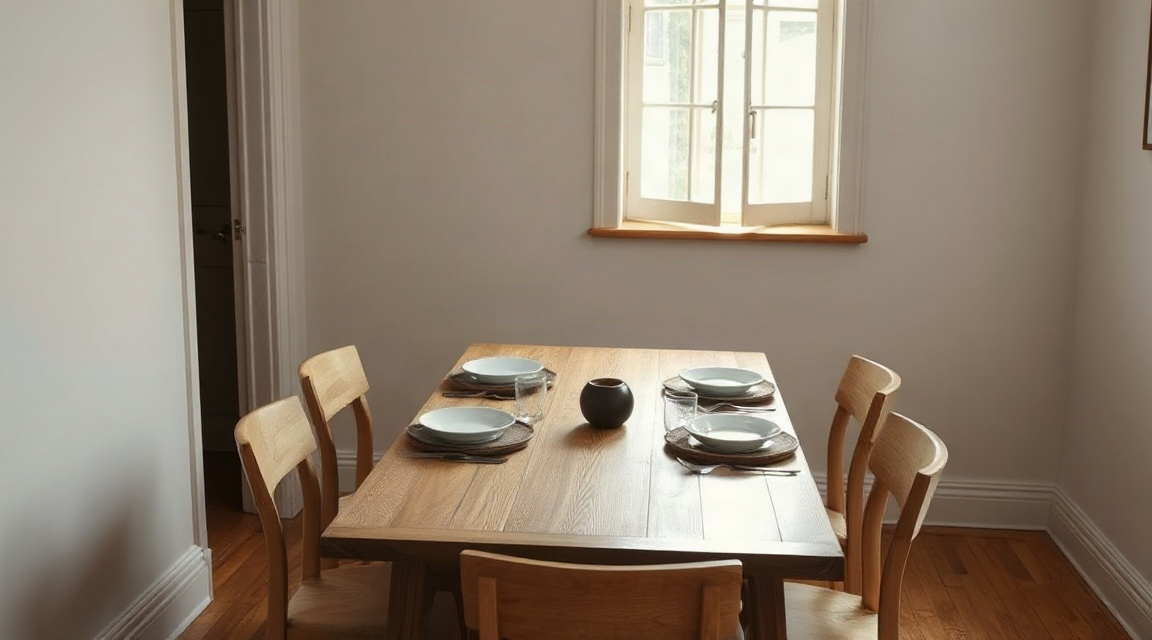
Stagers who write this up for sellers usually separate the notes into two categories: what to remove and what to adjust. Removal notes are things like extra chairs, personal mail, and stacks of books. Adjustment notes are things like moving a lamp, straightening a rug, or angling the table differently to make the room feel larger in photos. Both categories matter, and skipping either one leaves the room looking unfinished.
How Do You Stage a Dining Room That Doubles as an Office?
Many homes don't have a dedicated dining room anymore. The space is a dining table with a laptop permanently parked on one end, or a corner desk pushed against the wall where a hutch used to sit. This is common and it's not something to feel embarrassed about, but it does need to be addressed before photos.
The simplest fix is temporary separation. Move the desk setup elsewhere in the home for the listing period, even if that's a closet or a spare room. If that's not possible, stage the space so the dining function is obvious first: table cleared, chairs arranged around it, place settings or a simple centerpiece in place. The desk elements can be tucked to one side, but they should never be the first thing a viewer notices.
For homes where the dining space is really a multi-purpose room, it helps to pick one identity for the photos and lean into it. A room that's trying to be both a dining room and a home office in every photo usually reads as neither. Buyers have an easier time picturing a room that's clearly one thing, even temporarily, than a room that's visibly two things at once.
Pro tip: if the dining table is also the household's main flat workspace, do the staging pass the night before photos, not weeks before. Multi-purpose rooms drift back to their working state fast, and a staged look that has to last for weeks tends to slip.
This is also where a written staging report earns its keep. Instead of a seller guessing what "clear the table" means, a report can specify exactly what stays, what moves, and where it goes, room by room, so nothing is left to interpretation on the morning of the shoot.
What Should You Remove Before Photos Are Taken?
This is the question sellers ask most often, and the honest answer is: less than you'd think needs to be removed, but the removals that matter, matter a lot.
Start with anything that isn't part of the dining function. Storage boxes, seasonal items, sports equipment, anything that has migrated into the dining room because it was the nearest flat surface. These go first, no exceptions.
Next, look at surfaces. Tablecloths with visible wear, place mats that don't match, a runner that's faded on one side. These small items photograph poorly under listing lighting, which tends to be brighter and more direct than everyday household light. A worn item that looks fine in person can look tired in a photo.
Then look at the walls and shelving near the table. Personal photographs, calendars, and anything with handwriting or personal names on it should come down. This isn't about erasing the home's character. It's about giving viewers a room they can picture themselves in, rather than a room that clearly belongs to someone else.
Finally, check the chairs. Mismatched chairs are one of the most common issues in dining room staging notes. If chairs don't match and can't be swapped for matching ones, sometimes the better move is fewer chairs, arranged evenly, rather than a full mismatched set. A table with four matching chairs often photographs better than a table with six chairs in three different styles.
Dining Room Staging vs Living Room Staging: What's Different?
Sellers often assume the same approach applies to every room, but dining rooms and living rooms have different jobs, and the staging choices reflect that.
| Factor | Dining Room | Living Room |
|---|---|---|
| Main furniture piece | Table and chair set, usually one focal grouping | Sofa, chairs, coffee table, often several groupings |
| Common problem | Mismatched chairs, cluttered table surface | Oversized furniture, too many pieces for the space |
| Typical fix | Clear the table, match seating, adjust lighting | Reduce furniture count, rearrange for flow |
| Photo goal | A clear, single-purpose room that reads as dining | A room that shows scale and multiple uses |
| Multi-purpose risk | Doubles as office or storage | Doubles as playroom or media room |
The dining room's job in photos is narrower. It has one function to communicate, and the staging work is mostly about clarity: is this obviously a place to sit down and eat, with nothing competing for attention. The living room has to do more, showing that the space can hold seating, conversation, and sometimes a screen, all at once, which is a harder balance.
This is part of why dining room staging notes tend to be shorter than living room notes in a written staging report, but they still need to be specific. A vague note like "tidy the dining room" doesn't tell a seller whether the issue is the chairs, the table surface, or the lighting. A useful note names the exact item and the exact action.
Do You Need a Professional for Dining Room Staging?
Not always, but it depends on what's already in the home and how much guidance the seller wants.
| Approach | Best for | Trade-off |
|---|---|---|
| Do it yourself, using a checklist | Homes with matching furniture already in place | Takes longer to notice small issues like scuffed walls or mismatched chairs |
| Hire a stager for a walkthrough and written notes | Homes with some furniture that needs rearranging or removing | Requires scheduling a visit and following through on the notes |
| Full staging service with furniture brought in | Empty or awkwardly furnished dining rooms | Involves coordinating delivery and pickup around the listing timeline |
| Written staging report from photos alone | Sellers who want clear direction without a full walkthrough | Works best when good photos of the current room are available first |
A stager who has seen hundreds of dining rooms will notice things a homeowner walks past every day without seeing, like a light fixture with one bulb slightly dimmer than the others, or a table angle that makes a small room look smaller in photos. That kind of detail is hard to catch on your own precisely because it's familiar.
If you're working with an agent already, ask whether they have a stager they usually work with. If you're on your own, you can find a home stager near you to get a walkthrough, or start with a written report if you already have decent photos of the room as it sits today. For sellers in specific cities, there are local directories too, including home stagers in Toronto, home stagers in Ottawa, and home stagers in Oshawa.
For general guidance on preparing a home for sale beyond the dining room, the Listing Prep Almanac covers other rooms in the same level of detail, and the Compare staging options page lays out the difference between a full staging service, a partial one, and a written report on its own.
For broader context on how staging fits into the home selling process generally, the National Association of Realtors publishes guidance for sellers and agents on preparing a property for market.
FAQ
Does a dining room need a full furniture set to be staged well? No. A staged dining room needs a clear table, matching seating, and clean surfaces. If a full matching set isn't available, a stager can often work with what's on hand, sometimes reducing the number of chairs rather than mixing styles.
What if the dining room is currently used for storage? This is common, especially in smaller homes. The staging step is usually to relocate stored items elsewhere for the listing period, even temporarily, so the room can be photographed as a dining space rather than a storage area.
How long does dining room staging usually take? For a room that already has the right furniture, it can be a short session focused on clearing surfaces and adjusting details. Rooms that double as offices or storage take longer, since items need to be relocated first.
Key takeaways
| Point | Why it matters |
|---|---|
| Clear the table and match the chairs | These are the two most common issues in dining room photos |
| Multi-purpose rooms need a clear identity for photos | A room trying to show two functions at once reads as neither |
| Small surface details matter under listing lighting | Worn tablecloths or faded runners photograph worse than they look in person |
| Written staging notes should name specific items and actions | Vague notes like "tidy up" leave too much to interpretation |
| Professional help isn't always required, but it catches details owners miss | Familiarity makes small issues easy to overlook in your own home |
Keep reading
For sellers
The home staging checklist, room by room
Every room in the house, in the order to do them: what to remove, what to rearrange, and what a photo actually notices.
For sellers
What to fix before selling your house (and what to skip)
The repairs buyers notice first, and the projects you should not start six weeks before listing.
For sellers
How to declutter before selling, without the panic
A calm order of operations for thinning out a house before listing: what goes first, where it goes, and how far is far enough.
Want this list built for your actual rooms?
Upload a few phone photos and the free Staging Snapshot starts the plan for your rooms. No account needed.