Home Staging Services: A Beginner's Guide to Getting Started
Home staging services help a seller present a home to buyers by arranging furniture, adjusting decor, and preparing rooms so they photograph and show well. The work can range from a short walkthrough with written notes to a full furniture rental and placement job, and most sellers land somewhere between the two.
- What do home staging services actually include?
- How do you choose between different home staging services?
- What happens during a typical staging visit?
- Can you stage a home yourself?
- How do realtors and stagers work together?
What do home staging services actually include?
The phrase "home staging services" covers a wide range of work, and it helps to know the pieces before you call anyone.
At the simple end, a stager walks through the home and gives verbal or written direction: what to remove from a room, where to move a sofa, which shelf looks cluttered. No furniture changes hands. This is sometimes called a consultation.
At the other end, a full staging job means bringing in rented furniture, art, rugs, and accessories, and arranging them room by room. This is common for vacant homes, where empty rooms can be hard for buyers to read at scale.
In between, many stagers offer partial staging: they work with what the seller already owns, rearranging and editing it, and adding a small number of rented pieces where a room needs an anchor. A living room missing a rug or a coffee table is a common example.
Some services also include a written report that lays out, room by room, what should change before a photographer arrives. This report can cover furniture placement, lighting, wall art, clutter, and small repairs that are easy to overlook when you live in a space every day. A written report is useful because it gives the homeowner something concrete to work from between the stager's visit and the photo shoot, rather than relying on memory.
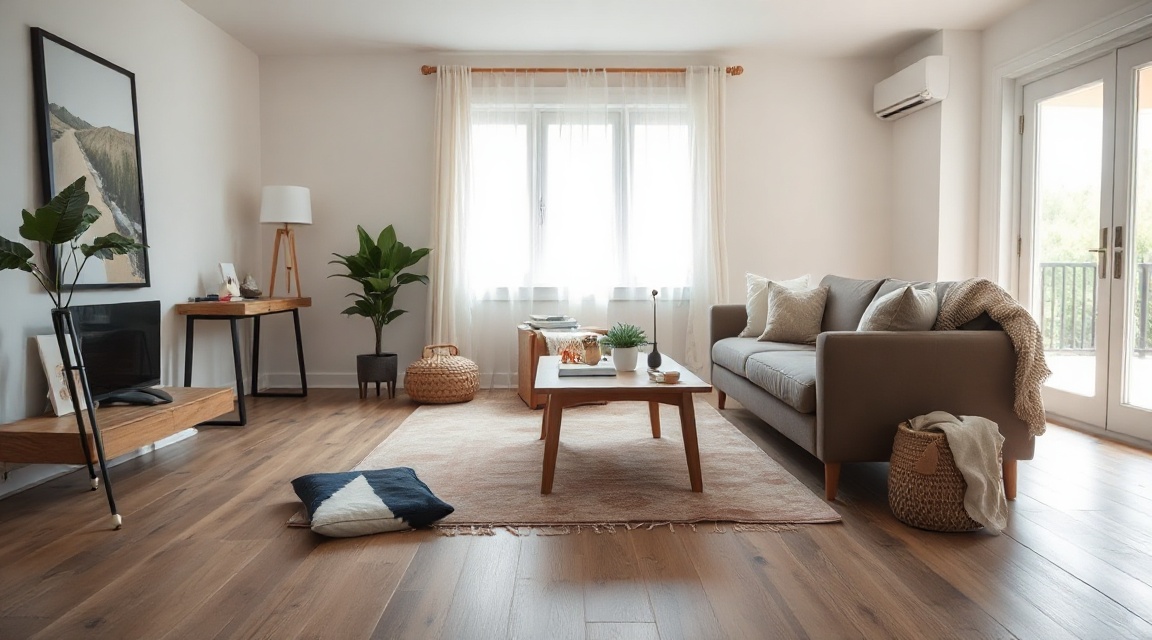
If you are trying to figure out what a given company offers, ask directly whether they provide consultation only, hands-on furniture placement, rental furniture, or a written report, since the term "staging" is used loosely across the industry.
How do you choose between different home staging services?
Choosing a service usually comes down to how the home is currently furnished, how much time is available before listing, and how much the seller wants to be involved in the physical work.
A vacant home with no furniture at all generally needs full staging or, at minimum, a few key rented pieces per main room. A furnished home that is simply cluttered or dated in its arrangement often only needs a consultation and some editing. A home in between, partially furnished or recently moved into, usually benefits from partial staging.
Below is a comparison of the three common approaches.
| Approach | Best suited for | Time to prepare | Ongoing effort |
|---|---|---|---|
| Consultation only | Furnished homes needing rearrangement | Fast, often a single visit | Homeowner does the physical work |
| Partial staging | Homes with some usable furniture | Moderate, a few days | Stager and homeowner share the work |
| Full staging | Vacant or mostly empty homes | Longer, coordination with delivery | Stager handles setup and removal |
Pro tip: before booking anything, walk through the home with your phone camera and take the same photos a listing photographer would take. Looking at rooms through a lens, rather than in person, often reveals clutter or awkward furniture placement that is easy to miss when you are standing in the room.
If you are comparing companies in a specific city, it can help to look at local options directly. You can find a home stager near you, or look at listings for home stagers in Toronto, home stagers in Ottawa, and home stagers in Oshawa if you are selling in one of those areas.
What happens during a typical staging visit?
Most staging visits follow a similar pattern, whether the stager is doing a light consultation or a full furniture job.
The stager usually starts with a walkthrough of the whole home, room by room, taking notes or photos as they go. They are looking at how each room reads to someone who has never lived there: what draws the eye first, what feels crowded, and what feels empty. This is different from how a homeowner sees the same rooms, since familiarity tends to hide clutter.
After the walkthrough, the stager typically gives direction on furniture placement first, since that has the biggest effect on how a room photographs. Removing an oversized piece, angling a sofa away from a wall, or clearing a hallway can change how spacious a room feels without adding anything new.
Next comes surface-level editing: countertops, shelves, and tabletops are cleared of daily clutter and reset with a smaller number of intentional items. Personal items, such as family photos and mail, are usually the first things removed, since buyers respond better to rooms they can imagine themselves in.
Lighting often comes up too. Stagers commonly suggest opening curtains fully, replacing dim bulbs, and turning on lamps that had gone unused, since listing photos rely heavily on how bright and even the lighting looks.
By the end of the visit, the homeowner or agent usually has a room by room list of changes to make before the photographer's appointment. Some stagers hand this over verbally, others provide it as a written report. For sellers managing the process themselves, the Listing Prep Almanac is a reference for working through this room by room without missing common items.
Can you stage a home yourself?
Yes, and many sellers do at least part of it themselves, particularly for furnished homes that only need editing rather than new furniture.
The basic principles are not complicated: remove excess furniture rather than add it, clear surfaces down to a few intentional items, open curtains and turn on lights before photos, and put away anything highly personal. These changes cost nothing beyond time and effort, and they account for a large share of what a paid consultation would also recommend.
Where self-staging tends to fall short is in vacant rooms and in rooms with an awkward layout that is hard to see clearly from inside. It is also common for homeowners to underestimate how much personal clutter has accumulated, simply because they see it every day and have stopped noticing it. A second set of eyes, whether a stager, a friend, or even a photo taken with a phone, often catches things a homeowner has stopped seeing.
If you decide to handle staging yourself, it helps to work room by room rather than jumping around the house, and to finish one room completely before moving to the next. Half finished rooms are harder to photograph well than rooms that were never touched at all.
Pro tip: photograph each room after you finish staging it, using the same angle a listing photographer would likely use, standing in a doorway or corner rather than the center of the room. This gives you an honest preview of how the space will look in listing photos, rather than how it looks while you are standing in it.
If you want to compare the self-staging route against paid options side by side, the page to compare staging options lays out the practical differences.
How do realtors and stagers work together?
Realtors and stagers often work together closely, since both are trying to get a listing ready for photos and showings on a similar timeline.
In many cases, the realtor brings in the stager as part of preparing a listing, and the stager's direction is passed along to the seller either directly or through the agent. Some agents prefer to be present during the staging walkthrough so they can weigh in on which rooms matter most for the specific buyers likely to view the listing. Others leave the process entirely to the stager and homeowner, and only see the result once photos are scheduled.
A written report from the stager is useful in this arrangement because it gives the agent something to review and forward, rather than relying on a verbal summary that can lose detail. It also gives the homeowner a document to work from at their own pace between the stager's visit and the photo shoot, which matters when schedules are tight.
Some stagers work independently of any agent, particularly when a homeowner is selling privately without a realtor. In that case, the stager's report or direction goes straight to the homeowner, and there is no agent involved to coordinate timing with a photographer.
If you are a stager or agent trying to standardize how staging notes are written up across listings, it can help to look at how other markets structure this handoff. The Real Estate Staging Association publishes general information on staging practices that agents and stagers in the US and Canada commonly reference.
FAQ
Do I need to hire a professional, or can a friend help me stage? Either can work, depending on the home. A friend with a good eye can catch clutter and awkward furniture placement that you have stopped noticing. A professional stager brings more experience across many different homes and, for vacant properties, access to rental furniture that a friend typically cannot provide.
How long before listing photos should staging happen? Staging is usually finished a day or two before the photographer's visit, which leaves time to notice anything that still looks off in daylight and fix it. Rushing staging on the same day as photos leaves little room to adjust lighting or rearrange a room that does not look right.
Does every room in the home need to be staged? Not necessarily. Main living areas, kitchens, and primary bedrooms tend to get the most attention in listing photos, so they benefit the most from staging work. Smaller secondary rooms, storage areas, and utility spaces often need only basic tidying rather than full staging treatment.
Key takeaways
| Point | Why it matters |
|---|---|
| Home staging services range from consultation to full furniture rental | Knowing the range helps you ask for exactly what a home needs, not more |
| Furniture placement usually comes before decor changes | It has the largest effect on how a room reads in photos |
| Vacant homes typically need more staging than furnished ones | Empty rooms are harder for buyers to picture at scale |
| Self-staging works well for furnished homes needing only editing | It costs time rather than money and covers many basics |
| A written report keeps agents, stagers, and homeowners aligned | It replaces verbal summaries that can lose detail between visits |
| Staging usually finishes a day or two before photos | It leaves time to catch and fix anything that still looks off |
Keep reading
For sellers
The home staging checklist, room by room
Every room in the house, in the order to do them: what to remove, what to rearrange, and what a photo actually notices.
For sellers
What to fix before selling your house (and what to skip)
The repairs buyers notice first, and the projects you should not start six weeks before listing.
For sellers
How to declutter before selling, without the panic
A calm order of operations for thinning out a house before listing: what goes first, where it goes, and how far is far enough.
Want this list built for your actual rooms?
Upload a few phone photos and the free Staging Snapshot starts the plan for your rooms. No account needed.