Staging Before and After: What Actually Changes in a Listing
A staging before and after comparison shows the same room with the owner's everyday furniture and clutter removed, replaced or rearranged, and often with different lighting and accessories, so a buyer sees the space rather than the person living in it. The changes are almost always furniture, layout, light and surfaces, not anything permanent to the home.
- What does a staging before and after actually show?
- What changes between the before and after photos?
- How do you compare staging approaches fairly?
- Should you look at before and after photos before hiring a stager?
- What should you do with what you learn from before and after photos?
What does a staging before and after actually show?
Most staging before and after photos are taken from nearly the same angle, in the same room, a short time apart. The "before" shows the home as the owner lives in it: personal photos on the walls, mismatched furniture, maybe a treadmill in the corner of a bedroom. The "after" shows the same room set up for a listing: neutral bedding, a cleared surface, furniture pulled away from walls to open a walking path, and often a lamp or plant added where there was nothing before.
What the comparison is meant to demonstrate is scale and function. Buyers looking at photos online tend to misjudge room size when it is filled with oversized furniture or when every surface is covered. An empty corner reads as more space than a corner stacked with boxes, even if the square footage has not changed at all.
The comparison is not a promise about how a home will show once it sells. It is simply a demonstration of what a room can look like once the owner's daily life is set aside for photography. Reading staging before and after pairs with that in mind keeps expectations grounded. For a broader sense of how these comparisons are used across different property types, the Listing Prep Almanac walks through examples room by room.
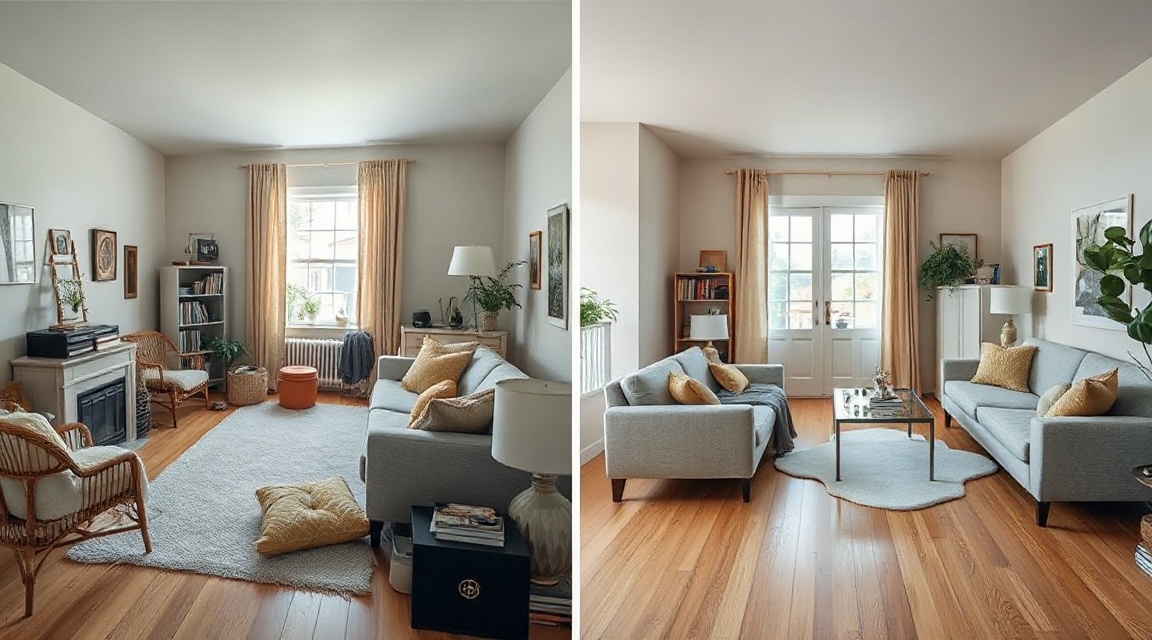
What changes between the before and after photos?
The list of what typically changes is shorter than people expect. Furniture is removed, added, or moved. Personal items, including family photos, are taken down. Surfaces are cleared. Lighting is adjusted, sometimes with lamps added, sometimes just by opening blinds fully. Wall colour is occasionally changed if it is very dark or very bold, though this is far less common than people assume from photos alone.
What does not change is anything about the layout of the home itself. Walls stay where they are. Rooms keep their function unless the stager is specifically asked to reimagine an underused space, such as turning a spare room into a reading nook instead of a storage room. Staging works with what is already there. It rearranges, removes, and occasionally borrows furniture, but it does not rebuild anything.
This is useful to separate clearly because sellers sometimes assume "before and after" implies renovation-level change. It does not. A stager working from a written report will typically ask for specific, small actions: move the sofa away from the window, remove the rug that does not fit the room, take down the calendar on the fridge. Each of these is a furniture or surface decision, not a permanent one.
Pro tip: when you look at a staging before and after set, try covering the "after" photo and asking what specifically is different about the "before" one. Usually it is three or four small things (clutter, an odd furniture placement, or a personal item) rather than one big change. That habit makes it easier to spot what your own rooms need without hiring anyone yet.
How do you compare staging approaches fairly?
Sellers preparing a listing usually choose between a few paths: doing it themselves using general checklists, hiring a stager to walk through and set up the home directly, hiring a stager who provides a written report a realtor or the seller can act on, or asking a realtor to coordinate staging as part of listing prep. Each has different demands on time and different levels of hands-on involvement.
| Approach | Who does the physical work | Time commitment | Best suited for |
|---|---|---|---|
| Self-directed checklist | Homeowner | Several evenings over a week or two | Sellers with time and some furniture already suited to the room |
| Full in-person staging | Stager and crew | One to two days, mostly the stager's time | Vacant homes or homes needing furniture brought in |
| Written staging report | Homeowner or realtor, using the report | A few hours spread over a week | Occupied homes where the owner can make changes themselves |
| Realtor-coordinated staging | Realtor manages a stager | Varies, usually a week | Sellers who want one point of contact managing the process |
None of these is universally better. A written report works well when the seller is capable and simply needs direction on what to do first. Full in-person staging suits a home that is already vacant or where the owner has no time at all. The Compare staging options page goes through these trade-offs in more detail, including what each option typically expects from the seller.
Should you look at before and after photos before hiring a stager?
Looking at before and after examples before hiring anyone is a reasonable first step. It gives a sense of a stager's style, whether they lean toward very minimal rooms or rooms with more furniture and colour, and whether that style matches the home being sold. A stager who consistently empties rooms almost completely may not be the right match for a seller who wants the home to still feel lived in in photos.
It also helps to look at before and after pairs from homes similar in size and layout to the one being listed. A small bedroom staged into a home office looks very different from a small bedroom staged as a guest room, and seeing both gives a clearer sense of what is possible with a similar footprint.
That said, before and after photos alone will not tell a seller which stager works well with their realtor, communicates clearly, or delivers on schedule. Those are good things to ask about directly, and checking local options is a reasonable next step. Home stagers in Toronto, Home stagers in Ottawa, and Home stagers in Oshawa are a starting point for sellers in those areas, and the general Find a home stager near you page covers other regions.
For general guidance on preparing a home for sale, including how staging fits alongside other listing steps, the U.S. Department of Housing and Urban Development publishes consumer-facing resources on home selling through its HUD homeownership pages.
What should you do with what you learn from before and after photos?
Once a seller has looked through enough staging before and after examples to understand the pattern, the next useful step is walking through their own home room by room with that pattern in mind. This does not require hiring anyone yet. It means noticing where furniture blocks a natural walking path, where a surface has become a catch-all, and which personal items would need to come down before a photographer arrives.
Many sellers find it useful to write this down room by room rather than trying to remember it. A written list turns a vague sense of "this room needs work" into specific actions: move the armchair, clear the dresser top, take down the corkboard. This is close to what a written staging report does for a realtor or stager, except done informally and without professional photography guidance behind it.
Pro tip: walk through the home with a phone camera and take a photo of each room exactly as it sits today, from the doorway. Compare that photo against the pattern noticed in staging before and after examples. It is often easier to spot clutter and awkward furniture placement in a photo than standing in the room itself, since a photo flattens the space the same way listing photos will.
From there, a seller can decide whether to act on the list themselves, hand it to a stager to execute, or ask their realtor for a referral. Any of those paths benefits from having the specific list already written rather than starting from a blank room.
FAQ
Does a staging before and after photo mean the home was renovated? No. The changes shown are almost always furniture, layout, lighting and surface changes such as clearing counters or removing personal items. Photos that show anything beyond that are showing a different kind of project entirely, not staging.
How long does it usually take to get from before to after? It depends heavily on the approach chosen. A written report can be acted on over a few hours spread across a week, while full in-person staging with a crew is often completed within a day or two once furniture and accessories are in place.
Can a homeowner create their own before and after without hiring a stager? Yes, for many rooms. Clearing surfaces, removing personal items, and adjusting furniture placement can be done without professional help. A stager becomes more useful when furniture needs to be sourced, borrowed, or arranged in ways the homeowner has not considered.
Key takeaways
| Point | What it means |
|---|---|
| Staging before and after mostly shows furniture and surface changes | Nothing permanent to the home is typically involved |
| Comparisons help set expectations, not promises | Use them to understand what is possible, not to predict an outcome |
| Several approaches exist, from checklists to full staging | Choose based on time available and whether the home is occupied |
| A written list of room-by-room actions is useful on its own | It works whether the seller acts on it directly or hands it to a stager |
| Local stager directories are a practical next step | Compare style and examples before reaching out |
Keep reading
For sellers
The home staging checklist, room by room
Every room in the house, in the order to do them: what to remove, what to rearrange, and what a photo actually notices.
For sellers
What to fix before selling your house (and what to skip)
The repairs buyers notice first, and the projects you should not start six weeks before listing.
For sellers
How to declutter before selling, without the panic
A calm order of operations for thinning out a house before listing: what goes first, where it goes, and how far is far enough.
Want this list built for your actual rooms?
Upload a few phone photos and the free Staging Snapshot starts the plan for your rooms. No account needed.