Turning House to Home: A Practical Listing Prep Guide
The phrase "house to home" describes the process of making a property feel lived-in, cared for, and easy to picture yourself in, which is exactly what buyers respond to when they scroll through listing photos. It is not about spending heavily on new furniture. It is about clearing clutter, arranging what remains with intention, and photographing rooms in a way that helps a buyer imagine their own life happening there.
- What does "house to home" actually mean for a listing?
- Where do you start when turning a house to home?
- Should you hire a stager or do it yourself?
- How long does the house to home process take?
- What mistakes slow the process down?
What does "house to home" actually mean for a listing?
When a real estate photographer arrives, they photograph what is in front of them. A room full of personal items, mismatched furniture, or half-finished projects photographs exactly as it looks: unfinished. The house to home process is the work done before that camera arrives, so what gets photographed already looks intentional.
This usually means three things happening at once. First, removing anything that distracts from the room's purpose, extra furniture, personal collections, cluttered counters. Second, arranging the remaining pieces so the room reads clearly, a bedroom looks like a place to sleep, a dining area looks like a place to sit down together. Third, adjusting small details, like coordinating cushion or towel colours, so the eye does not catch on anything jarring.
None of this changes what the home is. It changes how easily a buyer can picture themselves in it, which is a different thing. A stager or a well-prepared seller is not disguising a room. They are removing the noise so the room can be read at a glance, since most buyers spend very little time on each photo before deciding whether to keep scrolling.
The Listing Prep Almanac walks through this room by room, but the short version is: this stage is about editing, not decorating. Most homes already contain what they need. The work is choosing what to show and what to put away.
Where do you start when turning a house to home?
Start with the rooms that appear first in a listing gallery, which are usually the entry, living room, and kitchen. These get the most views, so they deserve the most careful attention early on. In the entryway, that might mean clearing shoes and coats out of sight and making sure the first thing a buyer sees is an open, uncluttered space.
From there, work room by room rather than trying to tidy the whole home at once. A useful order is: entry, main living space, kitchen, primary bedroom, remaining bedrooms, bathrooms, and finally any outdoor space. Working in this order matches how most listing photo sets are structured, so you are effectively preparing the home in the same order it will be shown.
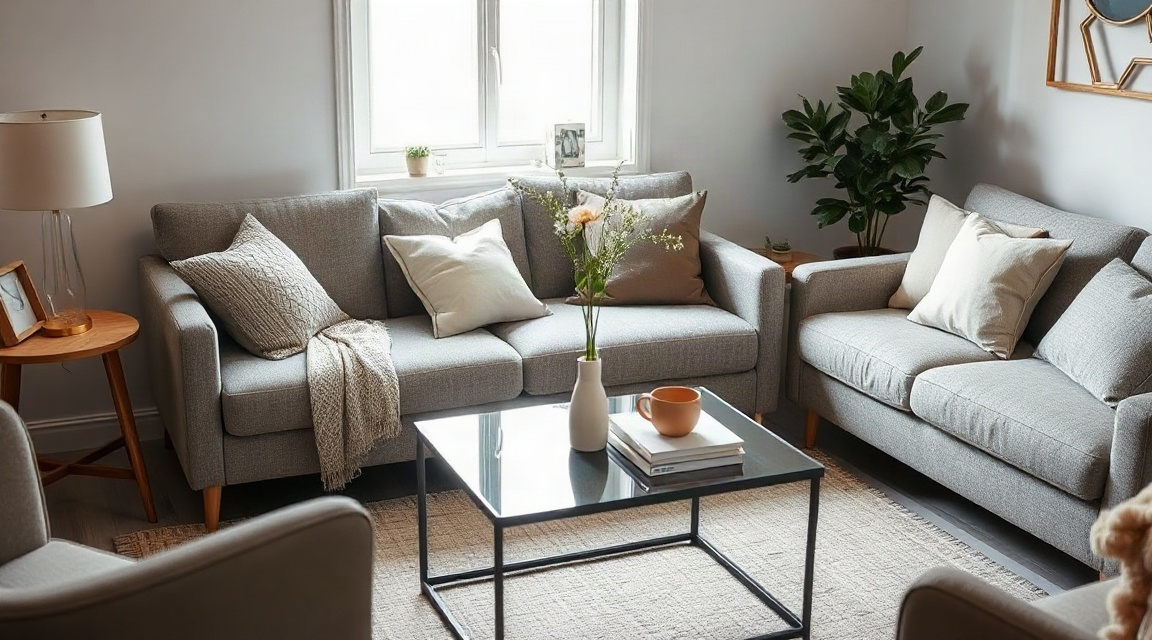
Within each room, ask three questions. Does this room look like what it is meant to be used for? Is there anything here that only makes sense to someone who already lives here, like a collection or a personal display? And is there anything that would draw the eye away from the room itself, such as visible cords or an overflowing shelf?
If you are working with a stager or a realtor, this is usually the point where a written room by room plan is useful, something that lists exactly what to move, remove, or adjust before the shoot. Many sellers find it easier to work from a list than to guess room by room on the day.
Should you hire a stager or do it yourself?
Both approaches work, and the right choice depends on the home, the seller's schedule, and how much furniture is already in place. The table below compares the practical trade-offs.
| Approach | Time required from the seller | Best suited to | Main trade-off |
|---|---|---|---|
| Do it yourself | Several hours to a few days, spread across rooms | Homes that are already lightly furnished and tidy | No outside perspective on what a buyer notices first |
| Hire a stager for a consultation | A short walkthrough plus follow-up work | Homes with some clutter or mismatched furniture | Seller still does the physical work, but with a plan |
| Full staging service | Minimal seller time once furniture is placed | Vacant homes or homes needing a full refresh | Requires coordinating a install and pickup schedule |
| Realtor-led prep list | Depends on how detailed the list is | Sellers who want a checklist without extra site visits | Quality depends on how thorough the list is |
Homeowners selling privately often start with the do it yourself route and bring in a consultation later if photos are not turning out the way they hoped. Realtors preparing a listing often go straight to a stager, since it saves back and forth with the seller.
If you are deciding between these, Compare staging options lays out what each option actually involves, and Find a home stager near you is a starting point if you decide a professional walkthrough makes sense. Stagers in larger centres, such as home stagers in Toronto, home stagers in Ottawa, and home stagers in Oshawa, often work on tight listing timelines, so booking early in the process helps.
Pro tip: if you are unsure which rooms need the most work, take a photo of each room on your phone before doing anything. Photos flatten a room the same way a listing photo will, and problems that are easy to overlook in person, like a cluttered counter or an off-centre rug, are usually obvious in a flat image.
How long does the house to home process take?
There is no fixed timeline, because it depends on how much needs to change and how many rooms are involved. A home that is already tidy and lightly furnished might only need an afternoon of adjustments. A home with more furniture, more personal items, or rooms that have taken on a storage role over time will take longer.
A rough way to think about it: allow more time for rooms that have drifted from their original purpose, a bedroom being used as an office, a dining room being used for storage, than for rooms that already function as intended. These rooms need to be reset to their original purpose before they can be arranged for photos.
It also helps to build in a buffer day between finishing the work and the photo shoot. Small things get noticed at the last minute, a chair angled slightly wrong, a shelf that still looks busy, and having a day in hand to fix them means the shoot does not get rescheduled.
Pro tip: a short walkthrough on the morning of the shoot helps catch anything that shifted overnight, regardless of how far in advance the rest of the work was done. Pets, weather, and daily use can undo small details quickly.
What mistakes slow the process down?
The most common mistake is trying to do every room at once instead of finishing one room before moving to the next. This leads to a home that looks half done in every direction rather than fully done in most directions, which is harder to work with as the shoot date approaches.
Another common mistake is focusing only on visible surfaces and skipping storage spaces that will appear in photos, like open closets or shelving. Buyers looking at photos of storage areas are trying to judge how much space is available, so a crowded closet works against the same goal as a crowded room.
A third mistake is treating personal items and everyday clutter as the same problem. Personal items are things that make a space feel specifically like the current owner's, and removing them helps a buyer picture their own life in the room. Clutter is simply excess, papers, extra furniture, items without a clear place. Both need to be addressed, but they are solved differently: personal items are stored away, while clutter is often removed altogether or relocated to a space that will not be photographed.
Finally, sellers sometimes wait until the last day to start, which leaves no room for the small adjustments that come up during a walkthrough. Starting earlier, even by a few days, generally leads to a smoother process for everyone involved, including the photographer and the realtor coordinating the shoot.
For general guidance on preparing a home for sale, the U.S. Department of Housing and Urban Development publishes consumer resources that cover the broader selling process alongside staging.
FAQ
Does turning a house to home mean redecorating the whole property? No. It usually means editing what is already there, removing clutter and personal items, and arranging furniture so each room reads clearly in photos. Full redecorating is rarely needed.
Can a seller manage this without hiring anyone? Yes, particularly in homes that are already lightly furnished and tidy. A stager or realtor becomes more useful when a home has more furniture to work around or when the seller wants a second opinion on what buyers notice first.
How soon before listing photos should this work start? Starting a few days before the shoot, rather than the day before, leaves time to catch small details during a final walkthrough and avoids rushing through any one room.
Key takeaways
| Point | Why it matters |
|---|---|
| House to home means editing, not redecorating | Most homes already have what they need; the work is choosing what to show |
| Start with the entry, living room, and kitchen | These rooms appear first in most listing photo sets |
| Do it yourself and hiring a stager both work | The right choice depends on furniture, time, and how tidy the home already is |
| Storage spaces need attention too | Closets and shelving appear in photos and affect how buyers judge space |
| A buffer day before the shoot helps | Small details shift overnight and are easier to fix with time in hand |
| Personal items and clutter are different problems | Personal items are stored away; clutter is often removed |
Keep reading
For sellers
The home staging checklist, room by room
Every room in the house, in the order to do them: what to remove, what to rearrange, and what a photo actually notices.
For sellers
What to fix before selling your house (and what to skip)
The repairs buyers notice first, and the projects you should not start six weeks before listing.
For sellers
How to declutter before selling, without the panic
A calm order of operations for thinning out a house before listing: what goes first, where it goes, and how far is far enough.
Want this list built for your actual rooms?
Upload a few phone photos and the free Staging Snapshot starts the plan for your rooms. No account needed.