What Does a Home Stager Do and Do You Need One?
A home stager is a professional who prepares a property for sale by arranging furniture, decor, and layout so listing photos and in-person showings present each room clearly to buyers. Most sellers hire one after signing with a real estate agent and before a photographer arrives, though some homeowners selling privately bring one in even earlier. The work can range from a short written walkthrough of changes to make, to a full furniture swap using rented pieces.
Table of Contents
- What does a home stager actually do
- How is a home stager different from an interior designer
- When should you bring in a home stager
- What are your options if you cannot hire a full staging team
- How do you find a home stager near you
- FAQ
What does a home stager actually do
A home stager walks through a property room by room and identifies what is helping the space read well in photos and what is working against it. That might mean removing personal items from a bathroom counter, rearranging a living room so the path through it feels open, or swapping a heavy curtain for something lighter so a window reads brighter in a photo.
Some stagers work purely with what is already in the home, moving and editing existing furniture and decor. Others bring in rented furniture and accessories to replace pieces that do not photograph well or that make a room look smaller than it is. Many produce a written report first, room by room, so the seller or their agent knows exactly what to change before the photographer shows up. That report is often the actual product being sold, separate from any physical staging work.
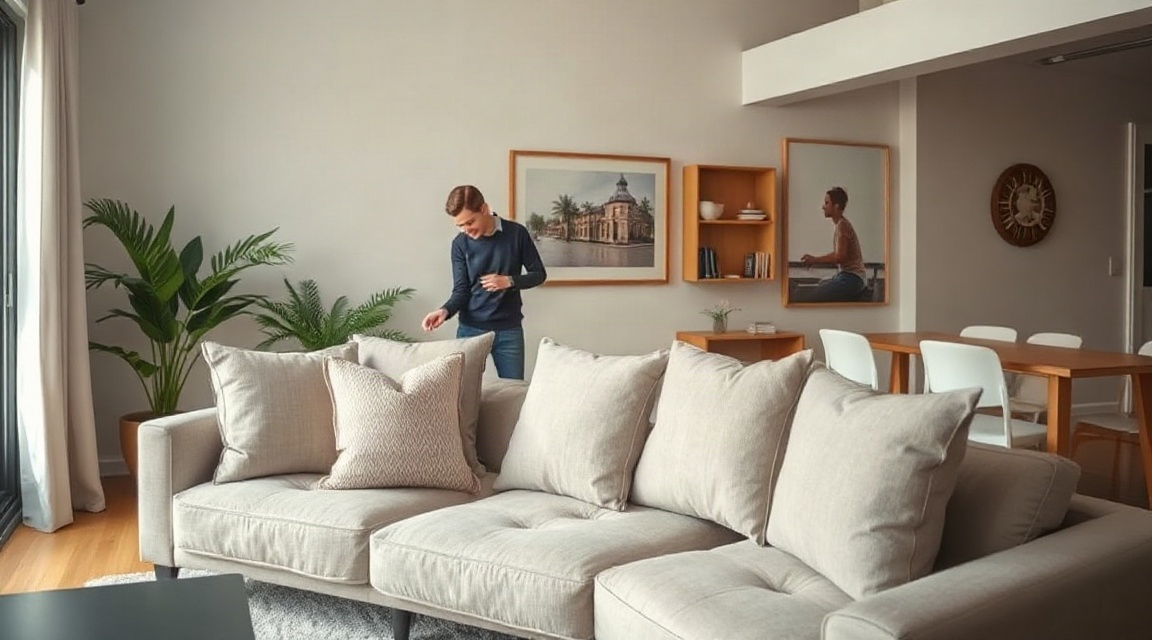
The scope of the job depends on the property and the seller's timeline. A vacant home usually needs furniture brought in so rooms do not look empty in photos. An occupied home usually needs editing: less furniture, less clutter, fewer personal items, better light. Neither approach is universally better. It depends on the property and how much time is available before photos are scheduled.
Pro tip: ask any stager you are considering whether they provide a written room-by-room list of changes separate from any physical staging work. Even if you do not hire them for the full job, that list alone can guide a weekend of prep work before a photographer arrives.
How is a home stager different from an interior designer
This is one of the most common questions sellers ask, and the confusion is understandable because the two roles can look similar in photos. An interior designer plans a space for how the people living there will use it long term. They think about a homeowner's habits, storage needs, and personal taste, and the result is meant to last for years.
A home stager plans a space for how it will read to a buyer walking through for the first time, or scrolling through listing photos. The staged look does not need to reflect anyone's actual daily life. It is temporary by design, meant to last through the listing period and then be undone. A stager is also usually working against a fixed date: the day the photographer arrives.
| Aspect | Interior designer | Home stager |
|---|---|---|
| Timeframe | Long term, built around daily living | Short term, built around a listing date |
| Client | The people who live in the home | The seller and their agent |
| Furniture | Often purchased to keep | Often rented or already on hand |
| Goal | A space suited to the household's routines | A space that photographs and shows clearly to buyers |
Because the goals differ, the training differs too. Some stagers come from a design background and add staging as a specialty. Others come from real estate directly, having seen enough listings to know what tends to hold buyer attention in photos. Neither path is required to do the work well, but it is reasonable to ask a stager which background they have, since it can shape how they approach a given room.
When should you bring in a home stager
The most common timing is right after signing with a real estate agent, before any listing photos are scheduled. This gives enough lead time to move furniture, arrange rentals if needed, and make the smaller adjustments, like editing a shelf or a closet, that take longer than people expect.
Waiting until the day before photos rarely works well. Rental furniture may not be available on short notice, and there is no time to reconsider a layout that does not photograph the way it looked in person. Booking a stager early, even if the actual work happens closer to the photo date, tends to produce a smoother process.
Some sellers also bring in a stager before deciding whether to list at all, using the walkthrough to understand what work the home might need regardless of when they sell. This is more common with properties that have been lived in for a long time, where personal items and furniture have accumulated in ways the owner no longer notices.
For homeowners selling privately without an agent, the timing question is the same, but the research burden is higher, since there is no agent already vetting local stagers. The Listing Prep Almanac walks through a general prep timeline that applies whether or not staging is part of the plan, and it is a reasonable starting point if you are not sure yet what your listing needs.
What are your options if you cannot hire a full staging team
Not every seller needs, or can arrange, a full staging job with rented furniture and a multi-day setup. There are a few common alternatives, and each involves different tradeoffs in time, effort, and how much control the seller has over the outcome.
| Approach | Who tends to use it | Main tradeoff |
|---|---|---|
| Full staging with rented furniture | Vacant properties, or occupied ones needing a major furniture swap | Requires the most lead time and coordination |
| Staging using existing furniture only | Occupied homes where the furniture itself is in reasonable shape | Limited by what is already in the home |
| A written staging report without physical work | Sellers doing the labor themselves, or agents advising several sellers at once | Requires the seller or agent to follow through on the list |
| No staging at all | Sellers on a very tight timeline or with limited flexibility | Photos and showings reflect the home exactly as it sits |
A written report is useful to understand on its own, since it is increasingly offered separately from physical staging. A stager or agent walks through the listing photos or the property itself and produces a document that lists, room by room, what to adjust before the next round of photos. Some sellers use that list themselves over a weekend. Others hand it to a cleaner or a handyman to execute. The Compare staging options page breaks down these paths side by side if you want more detail before deciding which fits your situation.
None of these options is right in every case. A property with very little furniture usually needs more than a report can fix on its own. A property that just needs editing and decluttering may not need rented furniture at all.
How do you find a home stager near you
Most sellers start with a recommendation from their real estate agent, since agents work with the same local stagers repeatedly and know whose work has held up across different property types. If you are selling privately or your agent does not have a stager to recommend, local searches and reviews are the next step, along with checking whether a stager belongs to a recognized trade association such as the Real Estate Staging Association, which maintains member directories in Canada and the US.
Location matters more than it might seem. A stager based in your city already knows local rental furniture suppliers and typical turnaround times, which affects how quickly a job can be scheduled. If you are in one of the areas Stager Notes covers directly, the city pages are a faster way to see who is working locally: Home stagers in Toronto, Home stagers in Ottawa, and Home stagers in Oshawa. For a broader search, Find a home stager near you is the general starting point.
When comparing stagers, ask to see photos from past listings, not just a portfolio of styled rooms. Listing photos show how a stager's work actually reads in the format buyers will see it, which is a different test than a polished portfolio shot taken for the stager's own website.
FAQ
Does a home stager need to be licensed? Staging is not a licensed profession in the way real estate sales or many trades are. There is no government body issuing staging licenses in Canada or the US. Some stagers hold certifications from private training programs or trade associations, which can indicate a level of formal training, but it is not a legal requirement to practice.
Can a home stager work with furniture I already own? Yes. Many stagers work primarily with existing furniture, focusing on rearranging, removing excess pieces, and editing decor rather than bringing in rented items. This is common in occupied homes where the furniture is already in reasonable shape and the main issue is clutter or layout.
Do I need a home stager if I am selling without an agent? It is not required, but the reasoning is the same as it would be with an agent involved. Listing photos and showings are how most buyers form their first impression of a property, and a stager's job is specifically to prepare a home for that first impression. Without an agent to recommend someone, the research to find a stager falls to the seller directly.
Key takeaways
| Point | Why it matters |
|---|---|
| A home stager prepares a property for buyer photos and showings | This is a distinct goal from long-term interior design |
| Timing matters more than most sellers expect | Booking early gives room for rentals and layout changes before photos |
| A written report is a separate, lighter-weight option | It suits sellers who want direction without a full physical staging job |
| Staging is not a licensed profession | Trade association membership is one way to check a stager's background |
| Local knowledge affects turnaround | A stager based in your area knows local rental and scheduling realities |
Keep reading
For sellers
The home staging checklist, room by room
Every room in the house, in the order to do them: what to remove, what to rearrange, and what a photo actually notices.
For sellers
What to fix before selling your house (and what to skip)
The repairs buyers notice first, and the projects you should not start six weeks before listing.
For sellers
How to declutter before selling, without the panic
A calm order of operations for thinning out a house before listing: what goes first, where it goes, and how far is far enough.
Want this list built for your actual rooms?
Upload a few phone photos and the free Staging Snapshot starts the plan for your rooms. No account needed.